








 Shipments available and to Cyprus.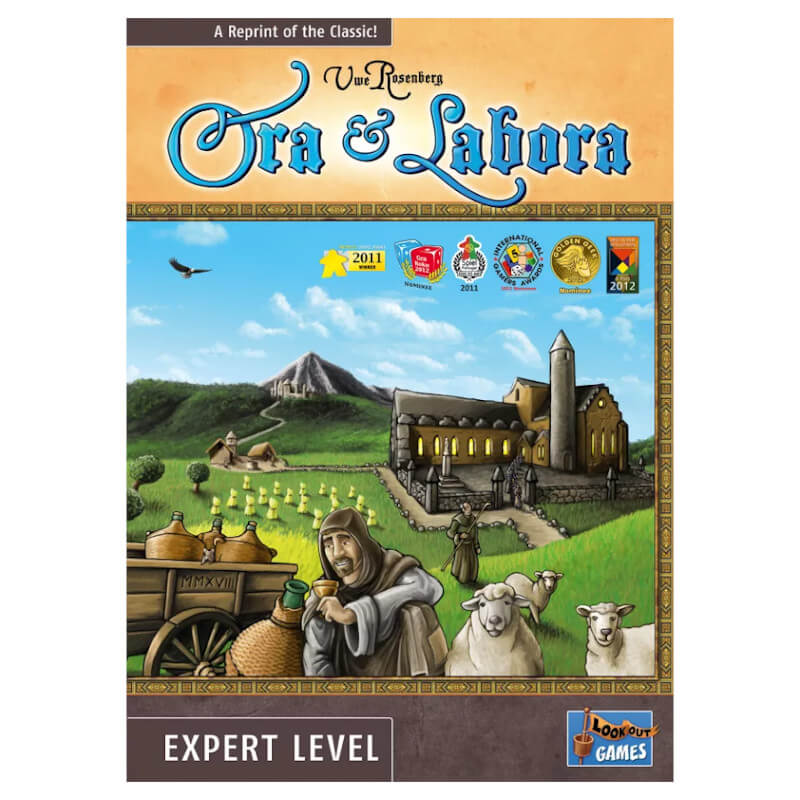
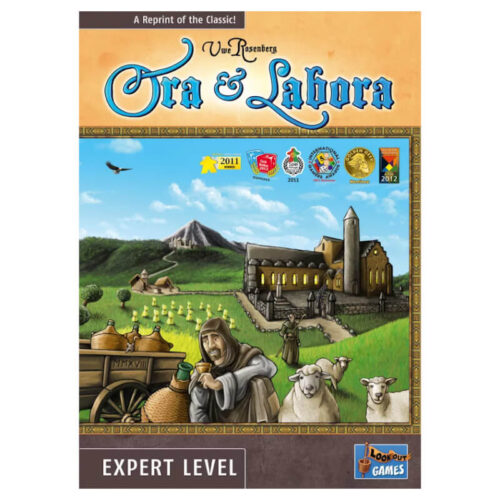
Ora Et Labora
In Ora et Labora, each player is the head of a monastery in the medieval era, who acquires land and builds buildings – small businesses that will earn resources and profits.
€59,50
Μόνο 1 απομένουν σε απόθεμα

Free gift wrapping available

Pay by cash on delivery, bank transfer, PayPal, or credit card.

Authenticity and quality guarantee
You can pay using the following methods:
• Cash on delivery (for purchases up to €119.99)
• Credit card payment.
• PayPal – via credit or debit card
• Bank transfer or IRIS payment.
• Cash on delivery (for residents of Heraklion, Crete)
With Elta Courier (Greece)
Your order will be delivered within 3 business days anywhere in Greece. ELTA Courier delivers Monday to Friday, 09:00–18:00.
For remote and hard-to-reach areas, delivery times may be longer.
Shipping costs up to 3kg are €4, while each additional kilogram costs €1.10.
For orders over €80.00, shipping is FREE throughout Greece.
If you are a resident of Crete, your order is usually delivered on the next business day.
For residents of Heraklion, Crete, order delivery may be arranged free of charge upon request.
With Box Now (Greece - Cyprus)
- For small and medium parcels within Greece, shipping costs €4, while for Cyprus it is €10 (for small and medium parcels, not large ones).
- For large parcels within Greece, our store will contact you before shipment regarding any difference in shipping cost.
With DHL Express (for Cyprus)
DHL Express shipments are priced according to the parcel’s weight and volume. The exact shipping cost is calculated during checkout.
With DHL Economy (for the rest of Europe)
Any exchange request must be made within 15 days from the purchase date. It must be accompanied by the purchase receipt so that we can assist you quickly and reliably.
They shopped at Meeple Planet and shared their thoughts on our service
In Ora et Labora (Latin “Pray and Work”), each player is the head of a monastery in the medieval era, who acquires land and constructs buildings – small enterprises that will earn resources and profits. The goal is to build a functioning infrastructure and manufacture prestige items – such as books, pottery, decorative items and relics – to score the most victory points at the end of the game.
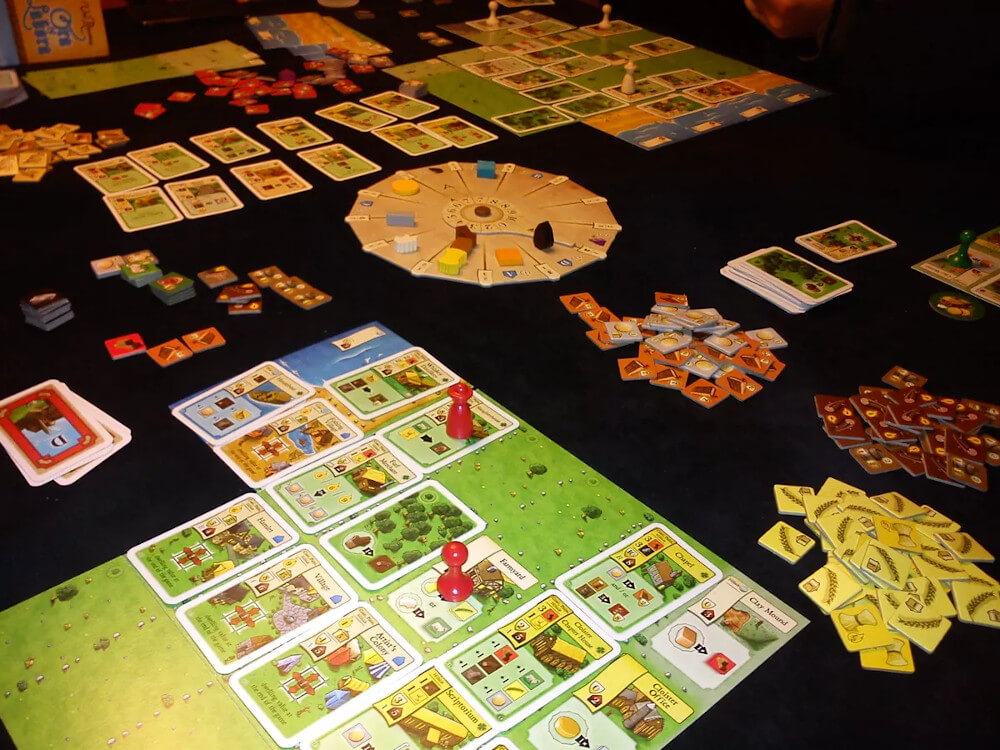
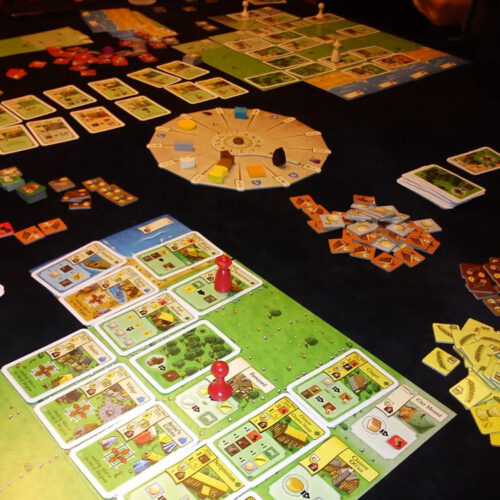
Ora et Labora, Uwe Rosenberg's fifth “big” game, has gameplay mechanics similar to Le Havre, such as two-sided resource tiles that can be upgraded from a basic item to something more useful. Instead of adding resources to the board round by round, as in Agricola and Le Havre, Ora et Labora uses a numbered rondel to show how many of each resource are available at any time. At the start of each round, players turn the rondel by one segment, simultaneously adjusting the count of all resources.
Each player has a personal game board. New buildings enter the game from time to time and players can construct them on their board with the building materials they collect, with some terrain restrictions on what can be built where. Some spaces start with trees or marshes on them, as in Agricola: Farmers of the Moor, so they block development until a player clears the land, but provide resources when removed. Smart building on your personal board will affect your final score, while players can buy additional land during the game if needed.
Players also have three workers who can enter buildings to take on the action associated with that location. Workers must remain in place until you have placed all three. You can enter your own buildings with these workers, but to enter and use another player's buildings, you must pay that player an entry fee so that they move one of their workers into the building to do the work for you.
See all strategy games here
Find us on Facebook and Instagram
| Weight | 1,500 kg |
|---|---|
| Number of Players | |
| Game Duration | |
| Availability | |
| Age | |
| Publisher | Lookout Games |
Features
Strategy Game
Number of Players: 1–4
Average Game Duration : 60’-180’
Age: 13+
Designer : Uwe Rosenberg
Illustration: Klemens Franz
Publisher: Lookout Games
Category: City Building, Economic, Industry / Manufacturing, Medieval, Religious, Territory Building
Mechanism : Increase Value of Unchosen Resources, Modular Board, Network and Route Building
Worker Placement, Worker Placement, Different Worker Types
Difficulty : 3,9 / 5
Rules Language: English
Language Dependence: Partial
Weight:
Only logged in customers who have purchased this product may leave a review.










Reviews
There are no reviews yet.