







 Shipments available and to Cyprus.


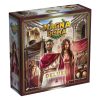
Sekigahara (5th Edition)
The Sekigahara (5th Edition) has been designed to offer a historically authentic experience through an intuitive game mechanism that can be played in a single game !
€69,87
Out of stock

Free gift wrapping available

Pay by cash on delivery, bank transfer, PayPal, or credit card.

Authenticity and quality guarantee
You can pay using the following methods:
• Cash on delivery (for purchases up to €119.99)
• Credit card payment.
• PayPal – via credit or debit card
• Bank transfer or IRIS payment.
• Cash on delivery (for residents of Heraklion, Crete)
With Elta Courier (Greece)
Your order will be delivered within 3 business days anywhere in Greece. ELTA Courier delivers Monday to Friday, 09:00–18:00.
For remote and hard-to-reach areas, delivery times may be longer.
Shipping costs up to 3kg are €4, while each additional kilogram costs €1.10.
For orders over €80.00, shipping is FREE throughout Greece.
If you are a resident of Crete, your order is usually delivered on the next business day.
For residents of Heraklion, Crete, order delivery may be arranged free of charge upon request.
With Box Now (Greece - Cyprus)
- For small and medium parcels within Greece, shipping costs €4, while for Cyprus it is €10 (for small and medium parcels, not large ones).
- For large parcels within Greece, our store will contact you before shipment regarding any difference in shipping cost.
With DHL Express (for Cyprus)
DHL Express shipments are priced according to the parcel’s weight and volume. The exact shipping cost is calculated during checkout.
With DHL Economy (for the rest of Europe)
Any exchange request must be made within 15 days from the purchase date. It must be accompanied by the purchase receipt so that we can assist you quickly and reliably.
They shopped at Meeple Planet and shared their thoughts on our service
Sekigahara (5th Edition)
The Battle of Sekigahara, fought in 1600 at a crossroads of Japan, unified the nation under the Tokugawa family for more than 250 years.
Sekigahara allows you to reenact this war as Ishida Mitsunari, defender of a child heir, or as Tokugawa Ieyasu, the most powerful daimyo (feudal lord) of Japan.
The campaign lasted only 7 weeks, during which each side improvised an army and a strategy with the forces their allies could provide. Each leader harbored deep doubts about the loyalty of his units – for good reason. Several daimyo refused to fight- some even changed sides in the midst of the battle.
To conquer Japan you must do more than field an army – you must be sure it will follow you into battle. Cultivate the loyalty of your allies and deploy them only when you are certain of their fidelity. Win a battle by winning a defection from your opponent's ranks.
Sekigahara (5th Edition) is full of unusual mechanisms:
No dice are used.
Cards represent allegiance and motives. Without a corresponding card, an army will not enter battle.
Faith is represented by the size of the hand, which fluctuates each round.
Battles are a series of deployments from hidden stacks of units, based on hidden loyalty factors. Faith-challenge cards create potential desertion events.
Sekigahara is a 3-hour block game based on the Japanese campaign fought in 1600. The 7-week war, fought along Japan's two great highways and in scattered sieges and skirmishes in the rear, elevated Tokugawa Ieyasu to Shogun and unified Japan for 265 years.
Sekigahara (5th Edition) is designed to provide a historically authentic experience through an intuitive game mechanism that can be played in a single game. Great effort has been made to preserve a clean game mechanism. (Despite the satisfactory amount of historical detail, the rules are short — 6 pages). Luck takes the form of uncertainty rather than chance.
No dice are used - combat is decided with cards. Blocks = armies and cards = incentives. The combination of army and incentives produces impact on the battlefield. Armies without matching cards do not fight. Battles are resolved quickly, but with tension, tactical involvement and a wide range of possible outcomes.
Legitimacy is represented by hand size, which fluctuates each week depending on the number of castles a player holds. Certain events reduce legitimacy, such as marches of forces and lost battles. Recruitment, meanwhile, is a function of a daimyo's control of key production areas. Objectives (enemy units, castles, resources) exist across the map. The initial setup is variable, so the situation is always new. Hidden information (blocks and cards) adds additional uncertainty. In this way the game resembles the real campaign.
The blocks are large and stackable. Each unit on the board is visible at once and the strategic situation is understood at a glance. The components use authentic names and clan colors and have a Japanese feel.
True to history, the objectives (castles and economic centers) and the forces (armies of allied daimyo) are dispersed. Supporting one front means neglecting another. The player moves between competing priorities. Each side wonders where their opponent wants to fight and where they are unprepared. The game includes many bluffs.
Each player must rally the various daimyo of their coalition, managing the morale and motivations of each clan. Forces are dispersed, and while there are reasons for their unification, the objectives are also dispersed and the timeframe tight, so skirmishes will occur across the island.
TIME SCALE: 1 week per 2-player turn
MAP SCALE: Point-to-point
UNIT SCALE: One square = 5000 soldiers
NUMBERTheIn PLAYERON: 2
See all strategy games here
| Weight | 1,124 kg |
|---|---|
| Number of Players | |
| Game Duration | |
| Availability | |
| Age | |
| Publisher | GMT Games |
Features
Number of Players: 2
Average Game Duration: 180′
Age: 14+
Designer: Matt Calkins
Illustration: Rodger B. MacGowan, Mark Mahaffey
Publisher: GMT Games
Category: Civil War, Pike and Shot, Wargame
Mechanism: Action Points, Card Play Conflict Resolution, Force Commitment, Hand Management, Point to Point Movement, Secret Unit
Complexity: 2,8 / 5
Rules Language: English
Language dependence : None
Weight:
Contents
Contents
Ground map
119 wooden pieces
1 and 1/2 sticker sheets
110 cards
Rulebook
Two player aid cards
Only logged in customers who have purchased this product may leave a review.









Reviews
There are no reviews yet.