








We now also ship with  Shipments available and to Cyprus.
Shipments available and to Cyprus.
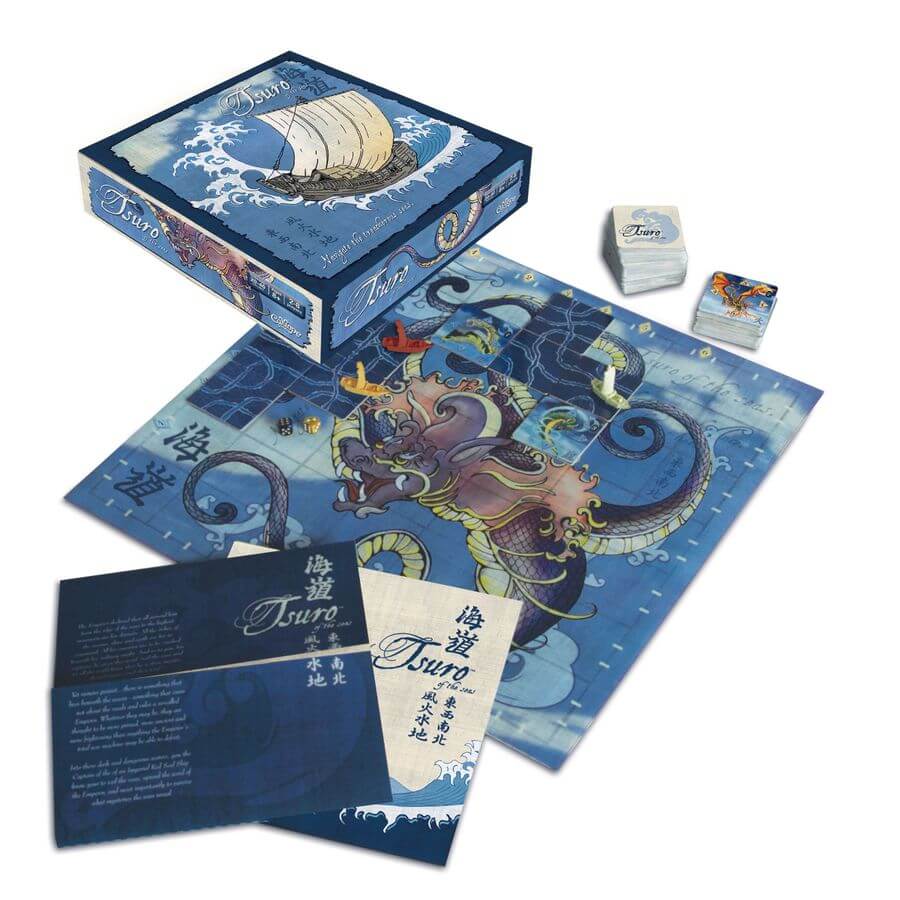


Tsuro of The Seas (slightly damaged product)
Original price was: €45,00.€40,90Η τρέχουσα τιμή είναι: €40,90.
Μόνο 1 απομένουν σε απόθεμα

Free gift wrapping available

Pay by cash on delivery, bank transfer, PayPal, or credit card.

Authenticity and quality guarantee
PAYMENT
You can pay using the following methods:
• Cash on delivery (for purchases up to €119.99)
• Credit card payment.
• PayPal – via credit or debit card
• Bank transfer or IRIS payment.
• Cash on delivery (for residents of Heraklion, Crete)
SHIPPING - DELIVERY COSTS
With Elta Courier (Greece)
Your order will be delivered within 3 business days anywhere in Greece. ELTA Courier delivers Monday to Friday, 09:00–18:00.
For remote and hard-to-reach areas, delivery times may be longer.
Shipping costs up to 3kg are €4, while each additional kilogram costs €1.10.
For orders over €80.00, shipping is FREE throughout Greece.
If you are a resident of Crete, your order is usually delivered on the next business day.
For residents of Heraklion, Crete, order delivery may be arranged free of charge upon request.
With Box Now (Greece - Cyprus)
- For small and medium parcels within Greece, shipping costs €4, while for Cyprus it is €10 (for small and medium parcels, not large ones).
- For large parcels within Greece, our store will contact you before shipment regarding any difference in shipping cost.
With DHL Express (for Cyprus)
DHL Express shipments are priced according to the parcel’s weight and volume. The exact shipping cost is calculated during checkout.
With DHL Economy (for the rest of Europe)
RETURNS - EXCHANGES
Any exchange request must be made within 15 days from the purchase date. It must be accompanied by the purchase receipt so that we can assist you quickly and reliably.
They shopped at Meeple Planet and shared their thoughts on our service
More Google reviews
The base game of Tsuro of the Seas resembles that of Tom McMurchie's Tsuro. Each of the players has a ship that wants to travel – that is, to remain on the game's board – for as long as possible. Whoever remains on the board the longest wins the game.
More details:
In each round players add “wave” tiles to the 7×7 board. Each tile has two “wave connections” on each edge. As tiles are placed on the board, they create a connected network of paths. If a wave is placed in front of a ship, that ship sails to the end of the wave. If the ship leaves the board, the player is eliminated from the game.
What is new in Tsuro of the Seas are the daikaiju tiles. They represent sea monsters and other creatures of the deep. It is worth noting that the daikaiju can move. Each tile has five arrows, four for movement toward each of the horizontal directions and one more for rotation. On the active player's turn, they roll two six-sided dice. With a total of 6, 7, or 8, the daikaiju will move, while with any other total they will remain in place. To determine which direction the daikaiju tiles will move, the player then makes a second roll, this time with a single die. On a 1-5 on the second roll, each daikaiju moves according to the arrow that corresponds to it. With a 6 on the second roll, a new daikaiju tile is added to the board.
If a daikaiju tile strikes an awakening tile, a ship, or another daikaiju tile, the object that was struck is removed from the game. Another way to be driven out! The more daikaiju tiles there are on the game board, the faster players will find themselves trying to breathe water…
Attention : One last copy remains in the shop which has a small defect on its back (see photo)
| Weight | 1,947 kg |
|---|---|
| Number of Players | |
| Game Duration | |
| Age | |
| Publisher | Calliope Games |
| Availability |
Features
Abstract Strategy Game
Number of Players : 2-8
Average Game Duration : 20’-40’
Age: 8+
Designer : Tom McMurchie, Jordan Weisman
Illustration : Ilonka Sauciuc, Dawne Weisman
Publisher: Calliope Games
Category: Abstract Strategy, Nautical
Mechanism : Dice Rolling, Hand Management, Network and Route Building, Player Elimination, Tile Placement
Difficulty : 1,43 / 5
Rules Language: English
Language Dependence: None
Weight:
Only logged in customers who have purchased this product may leave a review.
Μπορεί να σας αρέσει


-6%


6–8 business days

-4%

-5%

-18%
Offer

-10%



-5%






Reviews
There are no reviews yet.